
Advanced Macroeconomics Ⅰ
School of Economics / Graduate School of Economics
KUDOH Noritaka, Prof …
Last updated: 2025/09/29

Nagoya Commercial College, the predecessor of the School of Economics, was established in 1920. Soon the School of Economics will celebrate its centennial anniversary.
Nagoya Commercial College became Nagoya Economic College and then, included in the new Nagoya University during the education reform period from 1949 to 1953.
As School of Economics is consisted by the Department of Economics, and the Department of Business Administration, you can learn both, Economics and Business Administration.
Toward the next one hundred years, the School of Economics had been modifying its curriculum. One example is the introduction of the International Program. From October 2011, School of Economics has been offering its international program in which all the lectures are conducted in English.
More than one hundred foreign students are studying at School of Economics as a graduate or undergraduate student.
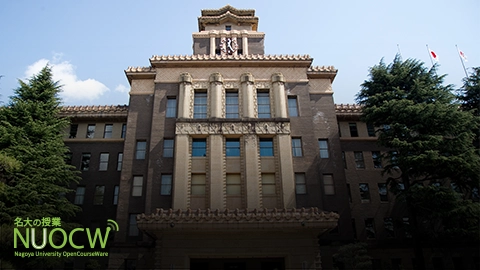
I am looking forward to welcoming you in this beautiful Higashiyama Campus.
We asked 5 questions to Prof. Hanazono Makoto, Dean.
1. What do you think is the strengths of the School of Economics / the Graduate School of Economics?
The strengths of the School of Economics and the Graduate School of Economics lie, at the undergraduate level, in cultivating students who possess both broad knowledge and solid expertise, and, at the graduate level, in providing an environment in which students can begin specialized research from an early stage.
In undergraduate education, we aim to foster what we call “T-shaped” individuals. The horizontal bar of the T represents broad knowledge, while the vertical bar represents deep expertise. Economic activity is formed through relationships among diverse actors, including firms, households, governments, local communities, and the international community. In such a context, the ability to collaborate with people from different fields is indispensable, and broad knowledge and logical thinking are essential for that purpose. One distinctive feature of our School is that students can study a wide range of fields, including economics, management and accounting, and institutions and history.
At the same time, we have well-developed systems for deepening students’ expertise. In particular, seminars in the third and fourth years are at the core of our undergraduate education. In small classes, generally limited to eight students, students read literature, give presentations, engage in discussion, and work on their graduation theses. Through this process, they develop the ability to formulate their own questions, conduct research, and express their ideas logically. We also offer an integrated five-year bachelor’s and master’s program, which allows students to take graduate-level courses and engage with research while still in the undergraduate program, enabling them to acquire advanced expertise at an early stage.
Internationalization is another strength. In addition to university-wide exchange programs, the School of Economics offers a rich variety of its own overseas dispatch programs, giving students many opportunities to study abroad. For example, through programs at the University of Freiburg, the National University of Singapore, and Korea University, students can experience language training, discussions with local students, company visits, and fieldwork. We have also established an exchange program with Brandeis University in the United States.
Another important feature of the School is its strong employment record. The Chubu region is one of Japan’s leading centers of manufacturing, and partly because of this regional context, our students have a strong track record of employment in manufacturing companies. Of course, their career paths are not limited to manufacturing; they also go on to work in finance, services, government, auditing firms, and many other fields. We also offer a course for students aiming to become certified public accountants, thereby supporting pathways to professional careers.
As for the Graduate School, a major feature is that students in the master’s program are assigned an academic supervisor upon admission and pursue their studies and research under that supervisor’s guidance. Because students can consult with their supervisors about research topics from an early stage and learn how to read the literature, conduct analysis, and write academic papers, this provides an excellent start, especially for those who aspire to research careers and are considering progression to the doctoral program. Career outcomes for both master’s and doctoral graduates are also strong, and doctoral graduates in particular have a strong record of obtaining research positions at universities and research institutions.
2. How do you want your students to grow through their university life?
I hope that, through their university life, students will grow into people who have a firm area of expertise while also being able to think about complex social issues from multiple perspectives.
For undergraduate students, I would like them to build a broad foundation through lectures and, through seminars, deepen their expertise and discover their own questions. I also hope they will actively engage with the real world beyond the university through overseas dispatch programs and study abroad, industry-government-academia collaborative courses, and opportunities to interact with companies and local governments. The experience of connecting knowledge gained at the university with real-world issues will become a valuable asset, whatever path they choose after graduation.
For graduate students, I hope they will acquire, through more specialized research, deep insight into society and the ability to approach problems using academically sound methods. Research has aspects that must be pursued individually, but it also develops greatly through discussions with supervisors and peers, as well as through exchanges with researchers in Japan and overseas. I hope students will value their own research themes while remaining open to knowledge and perspectives from other fields.
3. What do you think is the vision of the School of Economics / the Graduate School of Economics?
The School of Economics and the Graduate School of Economics aim to be an academic unit that links theory with reality, foundations with applications, and the region with the world, while cultivating intellectuals who can support a healthy society and returning research outcomes to society.
In terms of human resource development, our foundation is to realize Nagoya University’s educational goal of cultivating “courageous intellectuals” through education and research in economics and management. In the School of Economics, under the two goals of cultivating basic analytical ability and independent inquiry, we develop students’ fundamental capacity to analyze society and the economy, while also nurturing the ability to raise their own questions and pursue them independently. In the Graduate School of Economics, we further develop these abilities and cultivate the research and applied skills needed to address more specialized problems. By engaging with the latest research issues and exploring new academic theories and their applications, we aim to develop individuals with deep insight into society and strong logical thinking skills.
In research, we place emphasis on producing high-quality basic research and research outcomes rooted in the region. The Chubu economic area, where Nagoya University is located, is a center of industrial concentration and is also strongly connected with Asia through production activities. Taking advantage of these regional characteristics, we will promote research on industrial economies in a broad sense, including finance and public systems; research on the historical development of industries; and research on industrial management related to manufacturing.
At the same time, basic research that deepens our understanding of society and the economy is just as important as applied research that responds to real-world issues. Inheriting and further developing the intellectual assets accumulated by humankind, and thereby contributing to the improvement of human intellectual and cultural standards, is also an important mission for us. As the School of Economics and the Graduate School of Economics, we would like to contribute to society through both education and research while engaging with local and international communities.
4. What is the most memorable lecture when you were a student?
The lecture that left the strongest impression on me was an intermediate microeconomics course that I took in the upper years of my undergraduate studies. In that course, I learned how economic propositions can be discussed with great rigor using mathematics.
One day, the professor gave us an unannounced test and asked us to explain the significance or meaning of propositions covered in the lectures. The propositions were expressed mathematically, and their economic meaning was by no means obvious. I tried hard to think through what each proposition meant, but I found it very difficult to give satisfactory answers.
Later, when the professor presented the answers, I was surprised. Even propositions that looked mathematically complex could be explained very concisely. For example, some answers were along the lines of “under very weak assumptions of rationality, the law of demand holds” or “even if differentiability is assumed for a utility function, only a limited number of additional properties are obtained for the demand function.” In other words, the essence of the propositions could be expressed very simply.
That experience taught me the importance of treating mathematical expressions and theories rigorously, while at the same time never losing sight of the essence behind them. This is something I still value today, both in my research and in my teaching. That said, identifying the essence is by no means easy, which is precisely why the process of thinking carefully in lectures and seminars is so important.
5. Please give some words to those who are interested in joining.
Economics and management are fields of study that help us understand how society works and think about our own future. Issues we encounter in the news, such as inflation, monetary policy, corporate decision-making, employment, regional industries, international trade, and environmental problems, are all closely connected to our daily lives. Studying at the School of Economics and the Graduate School of Economics means acquiring the ability to think about these familiar issues not merely through intuition, but on the basis of theory and data.
The School of Economics at Nagoya University offers a wide range of learning opportunities, including a curriculum that covers diverse fields, small-group seminars, a course for certified public accountants, overseas dispatch programs, and an integrated five-year bachelor’s and master’s program. In the Graduate School, students can engage in specialized research from an early stage under the guidance of an academic supervisor. I believe this is an excellent environment for finding your own interests, deepening them, and connecting them with society.
To those who are considering applying, I would like you to value your curiosity. It is perfectly fine if your future goals are not yet clear. Through lectures, seminars, discussions with friends, overseas experiences, and contact with society, your interests will gradually take shape. What matters is to learn actively and take initiative.
At the School of Economics and the Graduate School of Economics, Nagoya University, I hope you will meet many people, think deeply, sometimes feel uncertain, and expand your own possibilities. I look forward to seeing you grow through your studies here into people who can create new value for society.
(May 25, 2026)